

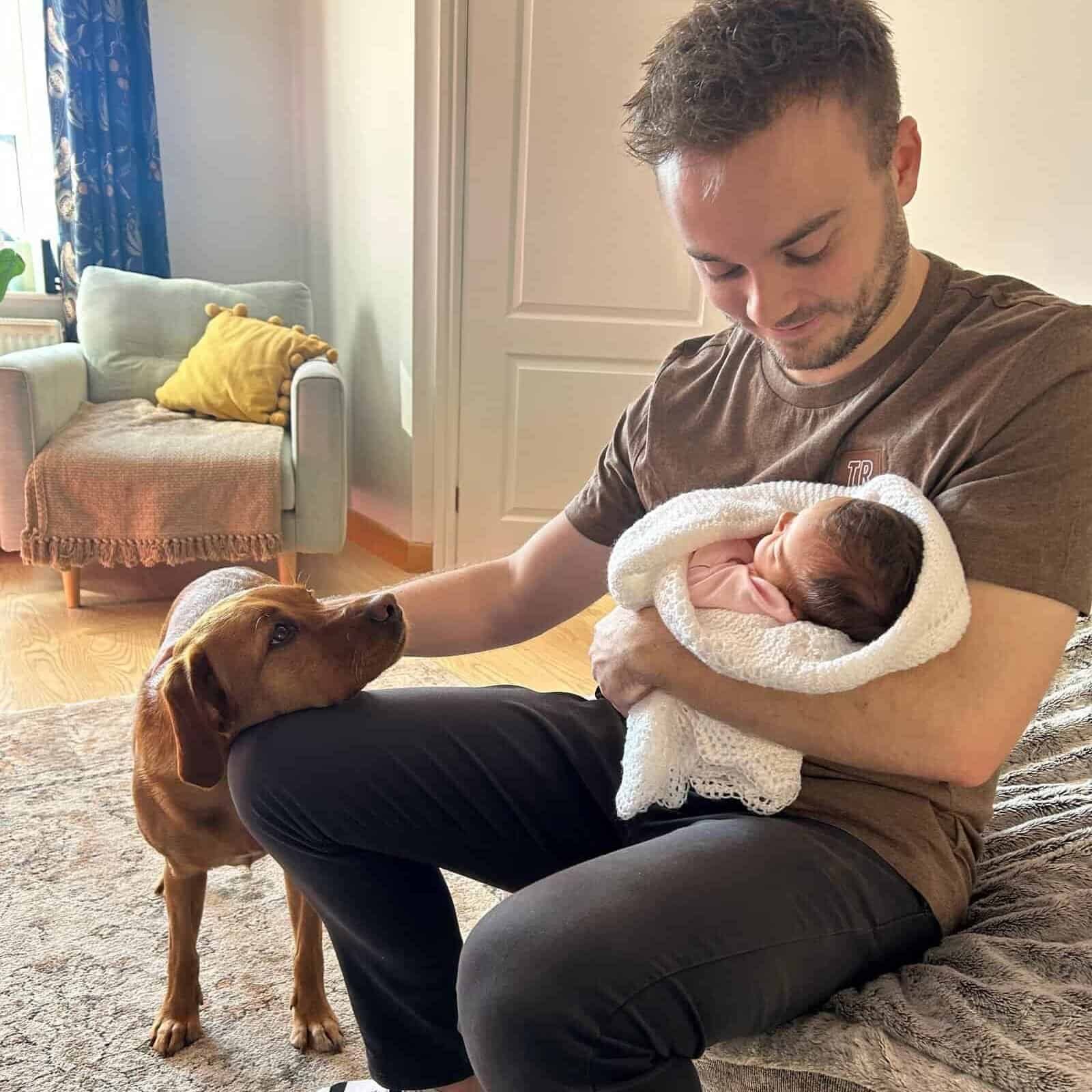
Bringing home a new baby is one of life’s biggest changes. That includes for your dog too. If your pup has been the centre of attention for years, the arrival of a tiny human can turn their world upside down overnight.
The good news is that with a little preparation, you can help your dog adjust to the changes ahead and set your growing family up for success.
In this guide, I’ll cover everything you need to know about how to prepare your dog for a new baby, from adjusting routines and practising essential training to introducing baby equipment and preparing for those all-important first days at home.
I brought my baby home from the hospital in March 2025 and have learned a few things since then! Check out my full hub for Dog & Baby Life here.

Why it’s important to prepare your dog before your baby arrives
Dogs thrive on routine and predictability. Suddenly introducing a newborn, sleepless nights and a completely different daily schedule can be overwhelming, even for the calmest of dogs.
Preparing your dog for your baby’s arrival is about helping your dog feel secure and confident as your family changes.
By making small adjustments during pregnancy, you’ll give your dog time to adapt gradually rather than expecting them to cope with lots of changes all at once.
Every dog is different, but the earlier you start preparing, the easier the transition is likely to be.

Start adjusting your dog’s routine early
One of the biggest changes your dog will notice once the baby arrives is a shift in their daily routine. Walks may happen at different times, there may be fewer opportunities for play, and your attention will naturally be divided between your dog and your baby.
Rather than waiting until your newborn arrives, start introducing small changes in your pregnancy to prepare your dog for a baby. I hired a dog walker a couple of months before baby’s arrival, when I was struggling to do long walks. By the time baby was here, my dog Honey was familiar with her new dog walker, the routine of being collected from the house and travelling in his van, and enjoyed her long walks with him.
You could try:
- Varying your walk times slightly.
- Reducing constant attention throughout the day.
- Encouraging independent play and rest.
- Asking friends or family to occasionally take over walks.
- Creating quiet periods where your dog settles alone.
Gradual changes can help your dog understand that routines sometimes shift, making the transition far less stressful later on.
Work on essential training before the baby arrives
You don’t need a perfectly trained dog before becoming a parent, but there are a few skills that can make life much easier once your baby arrives.
Focus on:
- Sit and stay.
- Leave it.
- Recall.
- Walking nicely on the lead.
- Settling calmly on a bed or blanket.
- Waiting patiently at doors.
The “settle” command is particularly useful during feeding sessions, nappy changes and those moments when you simply need both hands free.
Sometimes things won’t go to plan and you will have to keep working on training when the baby is here while your dog adjusts. For example, my dog who never jumped at me started jumping up when I was holding the baby. This caught me by surprise and was something we had to work on later.
Remember to have plenty of patience with them – but hold your boundaries. Don’t let your dog rule the house because you feel bad.
Introduce your dog to baby sights, sounds and smells
Babies bring lots of unfamiliar sights and sounds into the home, from crying and cooing to pushchairs, cots and mountains of tiny clothes.
You can help prepare our dog for a baby gradually by introducing these things before your baby arrives.
Try:
- Playing recordings of baby noises at a low volume.
- Setting up the nursery early.
- Practising pushing the pushchair on walks.
- Allowing your dog to sniff baby products such as lotion or blankets.
- Rewarding calm behaviour around baby equipment.
The goal isn’t to make your dog love every new object—it is simply to make these things feel normal and unthreatening.
If you know someone with a baby, ask if you can go on a walk with them, or invite them over so your dog can experience a baby in their home environment.
Prepare your home and establish boundaries
Your home may need a few changes once your baby arrives, and it’s much easier for your dog to adapt if those changes happen gradually.
Think about:
- Whether certain rooms will become dog-free zones.
- Where your dog will sleep.
- Whether you’ll use stair gates.
- Creating a quiet retreat where your dog can relax undisturbed.
- Teaching boundaries around the nursery.
If your dog currently sleeps on the sofa but won’t be allowed there once the baby arrives, start making that change now rather than after your newborn comes home. Consistency will help your dog understand the new rules.
We introduced a stair gate to stop the dog coming upstairs before our baby arrived. It was a good way to create separation if I wanted to feed the baby in peace, or to stop the dog going upstairs and disturbing the baby when she napped.
Help your dog become comfortable with less attention
Let’s be honest: once your baby arrives, your dog probably won’t receive the same level of attention they do now. I know that’s so sad to think about, and you swear you will be different. We all start with the best intentions!
That doesn’t mean they’ll be loved any less, but it does mean they’ll need to become comfortable entertaining themselves and settling independently. A great way to prepare your dog for a baby is just by practicing independence.
You could encourage this by:
- Offering enrichment toys and puzzle feeders.
- Scheduling short periods of independent time.
- Rewarding calm behaviour.
- Rotating toys to keep them interesting.
- Building positive associations with resting alone.
Teaching independence before your baby arrives can help prevent frustration later on.
Here are some enrichment toys I would recommend – 5 dog enrichment toys to tire out your puppy.
I also love to have long-lasting dog chews on hand also if I need to distract the dog for 20 minutes – Natural dog chews: Healthy and Delicious options for your dog
Practise walking with a pushchair
Walking a dog while pushing a buggy can feel surprisingly difficult at first, especially if your dog tends to pull on the lead. If possible, borrow a pushchair or practise with your own before your baby arrives. This is something I didn’t do, but wish I had.
Start in quiet areas and focus on:
- Loose-lead walking.
- Changing direction calmly.
- Heel command
- Stopping and starting.
- Walking beside the pushchair without crossing in front.
- Remaining calm around distractions.
Even five or ten minutes of practice a few times a week can make a huge difference.
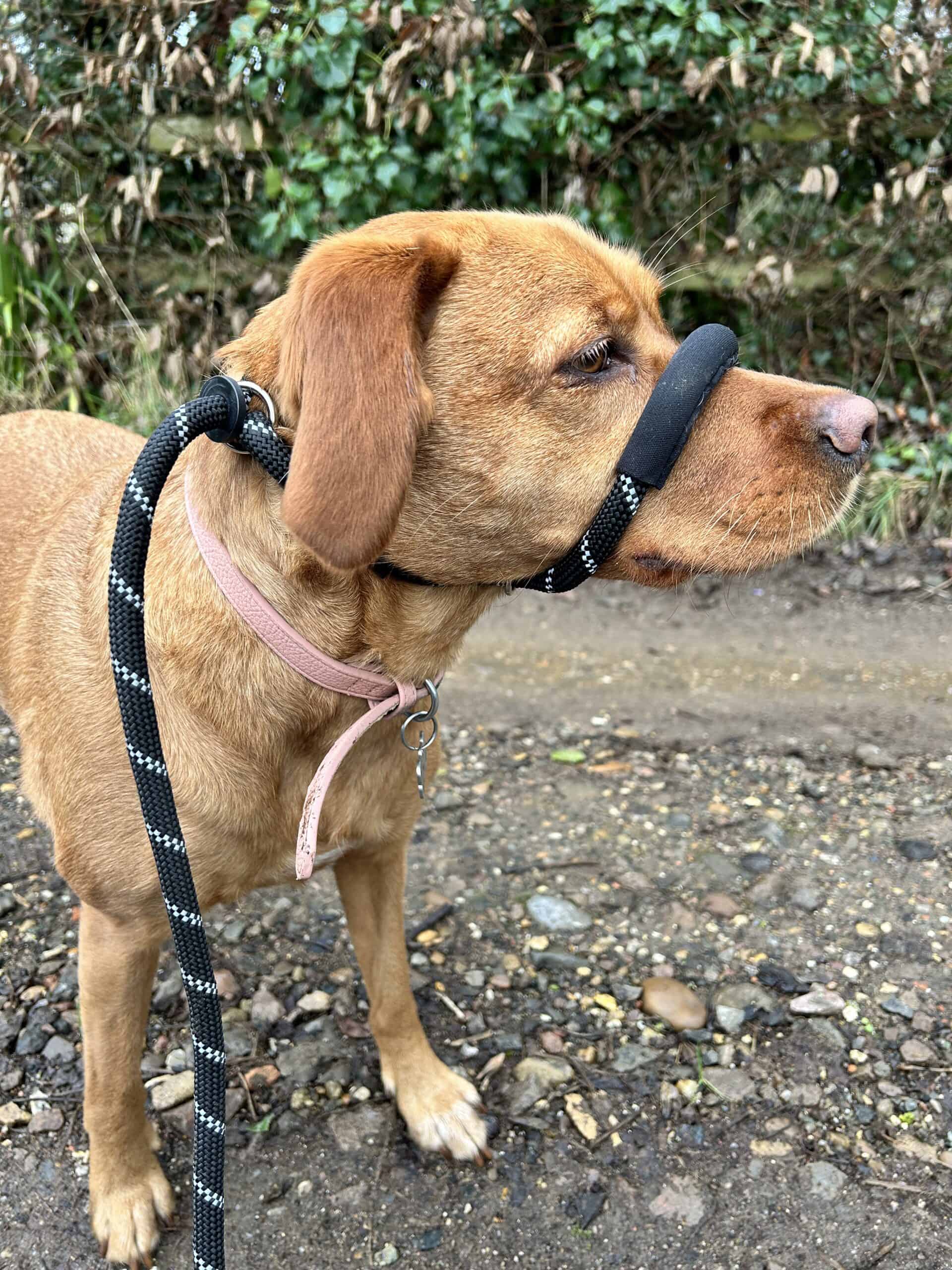
I ended up hiring a dog trainer when my baby was about 12 weeks old to help me and my dog master this skill. As my dog was such a strong puller, introducing a figure of 8 lead made a huge difference for us too.
Preparing for your baby’s first day at home
The moment you’ve been waiting for is finally here.
When introducing your dog to your baby for the first time:
- Make sure your dog has had exercise beforehand.
- Keep the atmosphere calm and relaxed.
- Allow your dog to approach at their own pace.
- Reward calm behaviour.
- Never force an interaction.
- Supervise all contact closely.
Remember that your dog doesn’t need to become best friends with your baby overnight. The goal is simply for everyone to feel safe and comfortable.
The best outcome here is actually for your dog not to show much interest in your baby.

Don’t forget about your dog after the baby arrives
The first few weeks with a newborn are intense, and it’s easy to focus entirely on your baby.
Try to continue:
- Daily walks and enrichment.
- One-to-one time with your dog.
- Training sessions, even if they’re short.
- Quiet cuddle time.
- Maintaining your dog’s routine where possible.
Small moments of connection can help reassure your dog that they still have an important place in your family. For my dog, play is such a huge part of bonding. Even when I was exhausted, just giving her ten minutes of tug of war filled her cup with love.
What if your dog struggles to adjust?
Some dogs adapt quickly, while others need more time. Signs that your dog may be struggling include:
- Avoiding the baby.
- Excessive barking.
- Changes in appetite.
- Destructive behaviour.
- Signs of anxiety or stress.
- Growling or guarding behaviour.
If you’re concerned, speak to your vet or seek advice from a qualified behaviourist as early as possible. Getting support sooner rather than later can make a huge difference.
Final thoughts
Preparing your dog for a new baby isn’t about achieving perfection before your little one arrives. It’s about making small, gradual changes that help your dog feel secure and confident as your family grows.
By adjusting routines, practising key training skills and introducing your dog to the sights and sounds of baby life ahead of time, you’ll give everyone the best possible start.
Most importantly, remember that You, your dog and your baby are learning. Be patient with yourself, celebrate the small wins and know that, with time, your family will find its new rhythm.
Frequently asked questions
How early should I start preparing my dog for a baby?
Ideally, start preparing your dog as soon as you find out you’re expecting. This gives your dog plenty of time to adjust to changes gradually.
Can dogs become jealous of a new baby?
Some dogs may struggle with the sudden change in routine and attention. Maintaining exercise, enrichment and one-to-one time can help ease the transition.
Should I let my dog sniff my newborn?
Under close supervision, it’s perfectly normal to allow your dog to investigate new smells at their own pace. Never force interactions, and always prioritise safety.
What training should my dog know before the baby arrives?
Useful skills include sit, stay, leave it, recall and settling calmly on a bed or blanket.



Leave a Reply