Your puppy crying in their crate is something the majority of new puppy owners will experience – you are not alone! The first day you bring home your puppy is one you’ll remember forever. It will be full of smiles, laughs, and probably some toilet accidents.
The first night with your new puppy is often a harder experience. If you’re reading this, I’m guessing you are crate training your puppy. This is a great decision, and it will pay off in the long run. However it can take some time and you will probably experience your puppy crying in the crate a lot.
This blog post contains affiliate links. This means as an Amazon Associate, I earn commission from qualifying purchases at no extra cost to you.
Is it okay to let your puppy cry in their crate?
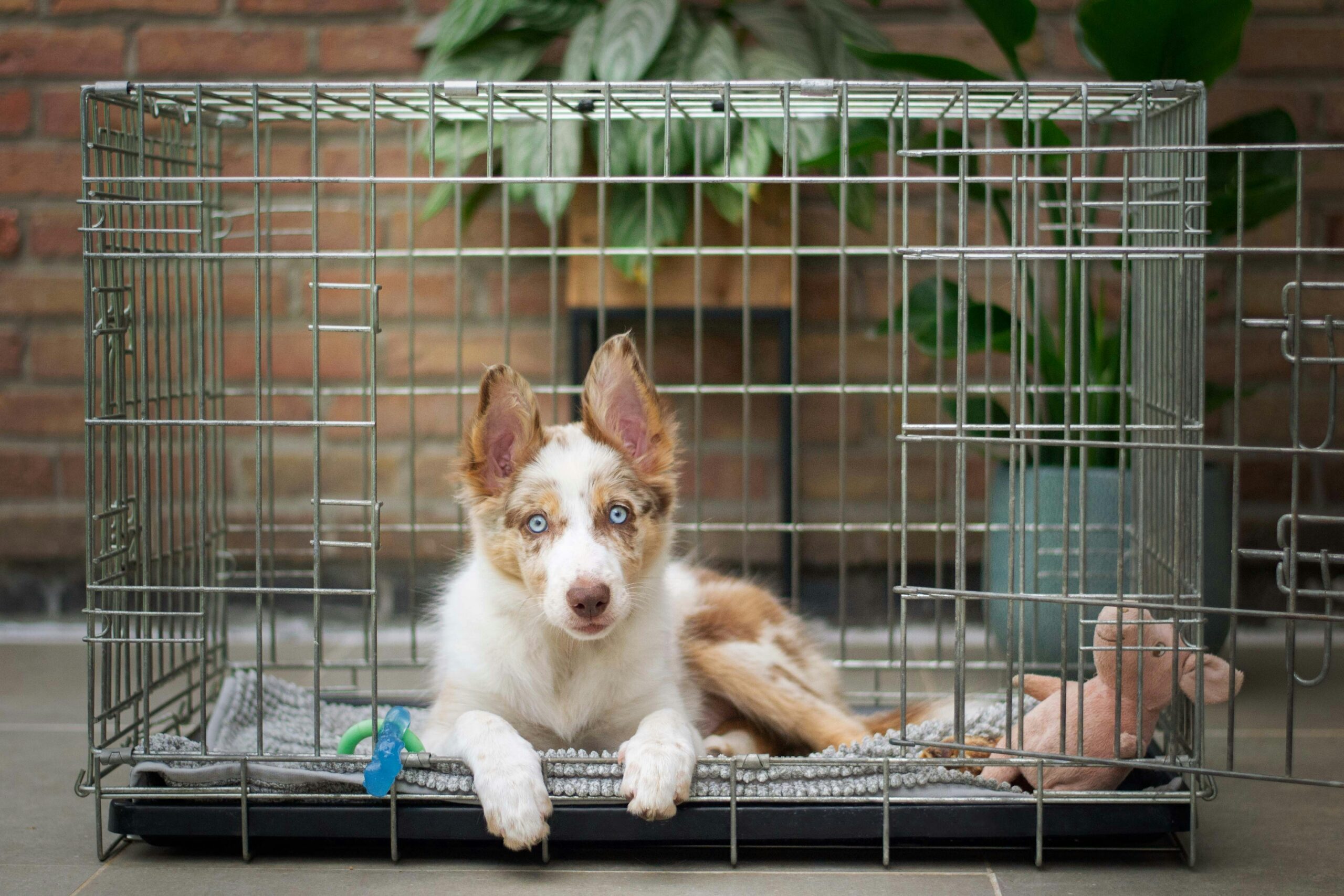
Yes, but not for extended periods of time. I wouldn’t let your puppy cry for more than around ten minutes before checking on them. A bit of crying for attention can be ignored, but you don’t want your puppy feeling stressed.
Think about it from their perspective: your dog is in a big scary new home, on their own for the first time with no mum or litter mates. They don’t know your house rules or routines yet, so it will take some time for them to settle down. Every dog is different, some puppies sleep through the night from night 1. But that didn’t happen for us, so I will tell you tips for dealing with a puppy crying in their crate from my experience.
Some background information
I got a puppy, Honey, in September 2022, when she was 10 weeks old. She is a Springador, which is a Springer Spaniel crossed with a Labrador. If you want to learn more about Springadors, checkout my post about them here. I am not a dog trainer, just a dog owner. I did all the research, read the books, watched the youtube videos, and went to the puppy training classes. Here is everything I learned on this topic, and what worked for us!
My favourite new puppy learning resource was Zak George’s New Puppy Survival Guide series on youtube, which you can check out here. After watching his youtube series I also bought his book, Dog Training Revolution, which I also thought was fantastic. It really helped me understand how to communicate with my puppy. You can check it out on Amazon here.
Though many people choose to start with the puppy crate in their bedroom at first, or choose to sleep downstairs with the puppy, I didn’t want to do either of those things for a few reasons. I put the crate in the kitchen, and kept the doors open so I could hear Honey if she cried. The kitchen has hard floors and immediate access to the garden, for quick and easy toilet trips.

Tips to stop your puppy crying in their crate at night
1. Get your puppy familiar with their crate.
Make sure you do this throughout the day, before bedtime. One of the best ways to do this is to feed your dog in their crate. You can encourage your puppy to play in their crate, by putting toys in there, and sitting by it with them. If you have a towel or blanket with their mother’s smell on, you can put that in there too. Just get them familiar and comfortable with their environment. It is a good idea to start training a ‘go to your crate’ command as early as possible, this is a great way to engage and tire out your puppy, and help them associate crate = treats.

2. Put a blanket over the crate at night
I wasn’t boujee enough to splash out on a fancy crate cover, I just used a big blanket to put over Honey’s crate (getting a puppy is expensive!). There are 2 reasons I put the blanket over her crate, the first being to stop early morning light disturbing her. The second and main reason is to create a routine that meant she knew the blanket over her crate means night time. It is a signal for her to relax. If you did want to get a proper crate cover to look a bit nicer than a blanket, you can get all sorts of stylish ones on Amazon, like this grey and white patterned one.
3. Stay with your puppy until they fall asleep
Instead of sleeping in the same room as the puppy, I stayed with her until she fell asleep. I did this for roughly the first 2 weeks, until she was more familiar and relaxed with being put to bed at night. I would sit on the kitchen floor, and read a book or something. The aim was to be as still and boring as possible so as not to get her excited. I kept a side of the blanket lifted up so we could see each other, and then fully covered the crate before going upstairs once she settled.
4. Reward your puppy for relaxing
While you are sitting next to the crate trying to be still and boring, it’s probable your puppy is crying in their crate. They are confused and frustrated that they can see you but can’t get to you! The best thing to do is give them a treat every time they stop crying, and everytime they lie down and relax. Gradually they will associate these positive behaviors with being rewarded, and will learn what you expect from them. Be prepared that for the first few nights, this could be a long process.
5. Make sure they have been to the toilet
Now, all the experts will say crate training helps with toilet training, as a dog will not want to soil where they sleep. However, accidents still happen. Don’t assume your tiny puppy knows these ‘rules’ experts think they should know, they’ve only been alive a few weeks.
On our first night with Honey, I mistook her barking as attention seeking and not needing the toilet, and she did a poo in her crate. I felt like the worst dog owner ever that she needed the toilet and I hadn’t let her out again! However in my defense, it was 2am and I had just been standing in the garden with her for ten minutes and she only did a number 1.
It will be hard to determine when your puppy is attention seeking and when they need the toilet, so my best advice for this is keeping a toilet diary for the puppy. My husband and I had a shared document on our phones, where we wrote down the time of every poo and wee. Over the first few days we got familiar with how often and what times she would typically go.
6. Set an alarm routine
After the first couple of nights, I learned how often our puppy would wake up for the toilet. So then I decided to set an alarm to go down and take her outside, to try and pre-empt the crying. For the first four weeks this was about 1am and 4am, and then I reduced it to one trip around 3am for another 2 weeks, and by 6 weeks in (when she was 16 weeks old) I had stopped going down at night altogether.
Now I’m not a dog psychology expert, but my reasoning for doing this was that I didn’t want to establish ‘crying and barking = set free from the crate’. We hoped that if we took her out to the toilet around the time she would naturally need it, then it would be easier to distinguish attention crying from needing the toilet.
7. The most important tip – Have Patience with your puppy!
This will be hard when you are sleep deprived, but just remember this stage isn’t going to last forever. Your puppy does not have malicious intentions to annoy you and keep you awake, they just don’t know any better. The long term benefits of crate training will outweigh the first few weeks of dealing with difficulties. And you can’t stay mad when you go down to see them and they are wagging a happy little tail at you.